







News Detail
Adjustable Welding Tables: Advantages and Practical Applications
author:hxrtools Time:2025-12-09 17:19:59 Click:101
A reliable Welding Table is a core piece of equipment in any metal workshop, especially when accuracy, repeatable results, and clean joint preparation are part of the workflow. As fabrication tasks become more diverse and Production schedules tighten, adjustable welding tables have emerged as a preferred solution. They not only provide a stable work area but also give welders additional flexibility that fixed-height platforms cannot offer. This makes them especially valuable for workshops, fabrication studios, and Manufacturer-level environments where consistent output and ergonomic working conditions matter.
Adjustable welding tables cater to jobs that involve various materials, shapes, and welding angles. This article outlines the main advantages of these tables, how their structural design supports better fabrication performance, and where they are most beneficial in real-world applications.
1. Why Adjustable Welding Tables Are Increasingly Used in Workshops
In the past, many welders relied on static surfaces—steel benches, solid plates, or simple stands. Though functional, they lacked the adaptability required for today’s multi-process workflows. Adjustable welding tables, on the other hand, have become standard because they address several key needs:
·Accurate workpiece alignment
·Flexibility for different part dimensions
·Support for changing fixture requirements
·Height adjustments for user comfort
·Reduced downtime between tasks
Whether the work involves one-off fabrication or repeated Production batches, having a table that can adapt to different welding processes helps operators maintain efficiency and quality.
2. Essential Structural Elements of an Adjustable Welding Table
Understanding what makes adjustable tables effective helps explain why they outperform traditional designs.
2.1 Height Adjustment for Better Ergonomics and Control
Welders often switch between overhead, flat, and horizontal welding positions. Being able to alter the table height allows them to work:
·With better posture
·With reduced strain during long welds
·With improved torch control
·With more consistent weld penetration
This directly translates into cleaner joints and more stable welding performance.
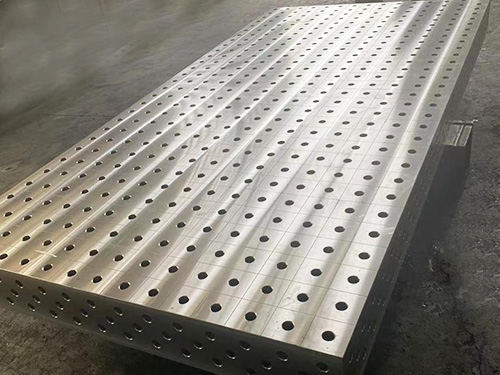
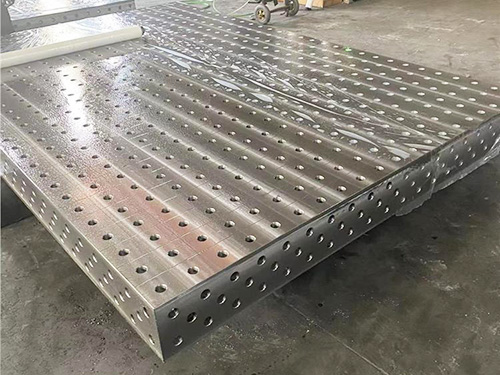
2.2 Slotted or Modular Surface Layouts
Modern tables often use perforated or grooved tops, making it easy to secure clamps, angle guides, and stops. This modular system is ideal for:
·Fabricating complex or multi-layer structures
·Quick adjustment of fixture points
·Minimizing setup time between tasks
·Repeating precise layouts
The ability to reposition fixtures allows shops and Manufacturer operations to switch from one assembly to another without rebuilding the entire jig system.
2.3 High Load Capacity for Heavy Components
Adjustable welding tables are typically built from thick, reinforced steel designed to withstand heavy workpieces. This ensures:
·Superior stability
·Resistance to heat deformation
·Support for oversized parts in machinery or construction
Such strength makes them suitable for demanding fabrication tasks.
2.4 Compatibility With Clamps and Specialized Fixtures
The right table supports a wide range of accessories, including:
·Quick-release clamps
·Magnetic holders
·Angle stops
·Custom brackets
This helps welders secure parts consistently and safely, improving both accuracy and efficiency in Production environments.
3. Key Advantages of Adjustable Welding Tables
3.1 Better Workflow Efficiency
Cutting, fitting, tacking, and finishing can all be done on the same surface, eliminating unnecessary movement between workstations.
3.2 Consistency for Batch Production
Adjustable tables help maintain uniform dimensions and alignment—critical for manufacturers producing large quantities of identical parts.
3.3 Strong Focus on Safety
A stable, heat-resistant work surface combined with secure fixtures reduces the chance of slipping, tipping, or poor weld positioning.
3.4 Reduced Setup Time
Operators can quickly change fixtures, adjust height, or modify the work angle without rebuilding the entire setup from scratch.
3.5 Improved Working Comfort
Height customization minimizes fatigue, supports proper arm movement, and leads to more accurate weld beads.
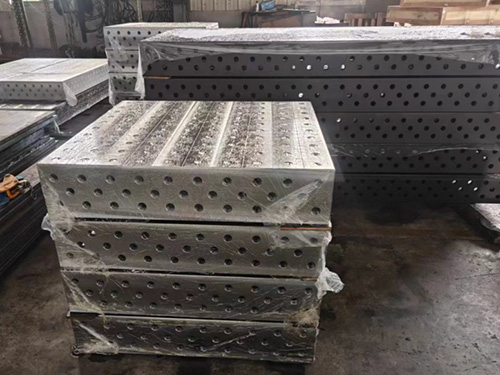
4. Practical Use Cases for Adjustable Welding Tables
4.1 Metal Fabrication Shops
General fabrication work benefits from a workstation that adapts to different shapes and welding styles.
4.2 Industrial Production Lines
Batch jobs, especially in machinery or structural steel Production, rely on tables that support consistent assembly and repeatable alignment.
4.3 Automotive and Mechanical Component Manufacturing
Frames, brackets, and chassis components require precise positioning that adjustable tables make easier.
4.4 Artistic and Custom Metalworking
Metal artists often need special angles and flexible clamping points that fixed tables cannot offer.
4.5 Pipe and Tube Assembly
With the right fixtures, adjustable tables securely hold cylindrical shapes for accurate welding.
5. Factors to Consider Before Choosing an Adjustable Welding Table
5.1 Tabletop Thickness and Material
A thicker plate offers stronger heat resistance and longer service life.
5.2 Weight Rating
Select a table that can support your heaviest regular workpieces.
5.3 Adjustment Range
The more height and angle adjustability available, the more versatile the workstation.
5.4 Fixture Compatibility
Ensure the table works with standard or modular clamping tools.
5.5 Manufacturer Quality and Production Capacity
Choosing a table from a reliable Manufacturer ensures lasting durability and the ability to meet Production demands if multiple units are needed.
Conclusion
A dependable Welding Table—especially one with adjustable features—is a powerful asset for both small workshops and larger Production facilities. Its adaptability helps fabricators work with greater accuracy, comfort, and safety while supporting a wide range of welding tasks. From complex assemblies to repetitive batch work, adjustable welding tables provide the flexibility and structural reliability needed for modern metal fabrication.
For anyone aiming to improve workflow efficiency, upgrade their workshop equipment, or support high-volume Production, investing in a well-designed adjustable welding table is a practical and worthwhile decision.
References
GB/T 7714:Groover M P. Fundamentals of modern manufacturing: materials, processes, and systems[M]. John Wiley & Sons, 2010.
MLA:Groover, Mikell P. Fundamentals of modern manufacturing: materials, processes, and systems. John Wiley & Sons, 2010.
APA:Groover, M. P. (2010). Fundamentals of modern manufacturing: materials, processes, and systems. John Wiley & Sons.
 HOT PRODUCTS

 CONTACT US
—— E-mail:project@haoranmj.com
—— Whatsapp:+86 18932785670
—— Tel:+86 18932785670
—— Add:Across from Sanjing Distillery on Road 4, Botou Economic Development Zone, Cangzhou City, Hebei Province