







News Detail
How to Choose Granite Platforms for Metrology Labs
author:hxrtools Time:2026-01-03 13:26:06 Click:130
A Granite Platform is a foundational element in precision measurement environments, particularly within metrology labs where dimensional accuracy and repeatability are critical. While advanced measuring instruments often receive the most attention, the platform supporting those instruments plays an equally important role in achieving reliable results.
As a Granite Platform manufacturer with stable production capability, delivering consistent performance across batch production requires careful control of material selection, machining accuracy, and quality inspection. This article explains how to choose the right granite platform for metrology labs and highlights the key factors that influence long-term measurement accuracy.
1. The Role of Granite Platforms in Metrology Labs
Metrology labs are designed to control and measure dimensional accuracy at the micron or even sub-micron level. Any instability in the supporting surface can introduce errors that compromise measurement integrity.
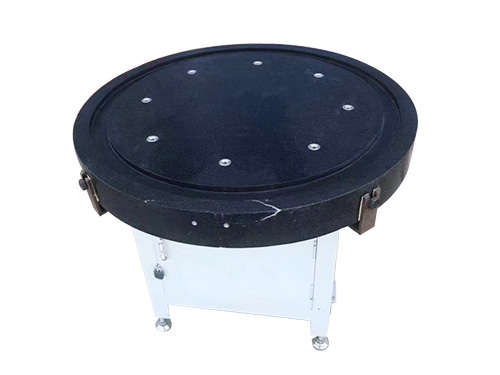
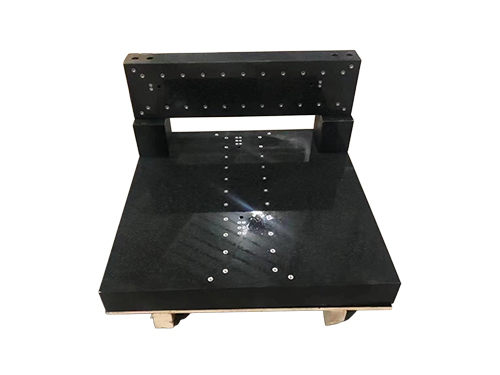
Granite platforms provide a stable, flat, and thermally consistent base for coordinate measuring machines (CMMs), height gauges, surface plates, and optical inspection systems.
2. Why Granite Is the Preferred Material
2.1 Dimensional Stability
Granite is naturally dimensionally stable and resistant to deformation under load. Unlike metal surfaces, granite does not warp easily over time, making it well suited for long-term measurement applications.
This stability ensures that the reference surface remains consistent even after years of continuous use.
2.2 Low Thermal Expansion
Granite exhibits low thermal expansion compared to many engineering materials. In temperature-controlled metrology labs, this property minimizes measurement drift caused by ambient temperature fluctuations.
As a result, granite platforms help maintain measurement accuracy throughout extended inspection cycles.
3. Flatness Grades and Accuracy Requirements
3.1 Understanding Flatness Standards
Granite platforms are manufactured to specific flatness grades depending on application requirements. Higher-grade platforms provide tighter tolerances and are used in high-precision measurement tasks.
Selecting the appropriate flatness grade ensures that the platform supports the accuracy level required by the metrology equipment.
3.2 Matching Platform Grade to Application
Not all metrology applications require the highest flatness grade. Over-specifying can increase cost without providing measurable benefits. Choosing a platform that matches actual measurement needs improves efficiency and cost-effectiveness.
4. Size, Thickness, and Load Capacity
4.1 Platform Dimensions
Granite platforms are available in various sizes to accommodate different instruments and workpieces. The platform should be large enough to support the equipment while allowing adequate working space.
Proper sizing reduces edge loading and improves long-term flatness retention.
4.2 Thickness and Structural Support
Thicker platforms generally offer higher stiffness and load capacity. For heavier metrology equipment, increased thickness helps prevent deflection and maintains surface integrity.

5. Surface Finish and Wear Resistance
5.1 Surface Texture
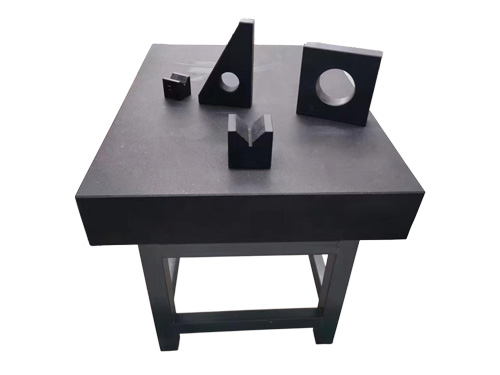
A fine surface finish reduces friction and allows smooth movement of measuring instruments. Granite’s natural hardness helps resist scratching and wear, preserving surface quality over time.
5.2 Long-Term Durability
Unlike metal platforms, granite does not rust or corrode. This makes it particularly suitable for controlled lab environments where cleanliness and consistency are essential.
6. Environmental Considerations in Metrology Labs
6.1 Vibration Resistance
Granite platforms offer excellent vibration damping properties, reducing the impact of external disturbances. This is especially important in labs located near production areas or heavy machinery.
6.2 Temperature and Humidity Stability
Granite is less sensitive to humidity changes, helping maintain dimensional stability even when environmental conditions fluctuate slightly.
7. Manufacturing Quality and Production Consistency
The performance of a granite platform depends heavily on manufacturing quality. Precision machining, lapping, and inspection processes ensure flatness and accuracy across the entire surface.
Manufacturers with standardized production lines can deliver granite platforms with consistent quality across bulk orders, supporting labs that require multiple identical platforms.
8. Maintenance and Calibration
Regular cleaning and periodic recalibration help extend the service life of granite platforms. Proper handling prevents surface damage and maintains flatness accuracy.
Routine inspection ensures that the platform continues to meet measurement requirements over time.
Conclusion: Selecting the Right Granite Platform for Precision Measurement
Choosing the right granite platform is essential for maintaining accuracy and reliability in metrology labs. Material stability, flatness grade, size, and manufacturing quality all contribute to long-term performance.
For organizations sourcing Granite Platform solutions from a manufacturer with reliable production capacity and bulk supply capability, careful evaluation of these factors ensures consistent measurement results and long-term operational confidence. A well-selected granite platform is not just a support surface—it is a critical reference standard for precision measurement environments.
References
GB/T 7714:Coordinate measuring machines and systems[M]. Boca Raton, FL, USA:: CRC press, 2012.
MLA:Hocken, Robert J., and Paulo H. Pereira, eds. Coordinate measuring machines and systems. Vol. 6. Boca Raton, FL, USA:: CRC press, 2012.
APA:Hocken, R. J., & Pereira, P. H. (Eds.). (2012). Coordinate measuring machines and systems (Vol. 6). Boca Raton, FL, USA:: CRC press.
 HOT PRODUCTS

 CONTACT US
—— E-mail:project@haoranmj.com
—— Whatsapp:+86 18932785670
—— Tel:+86 18932785670
—— Add:Across from Sanjing Distillery on Road 4, Botou Economic Development Zone, Cangzhou City, Hebei Province