







News Detail
The Role of Welding Tables in Robotic Welding Applications
author:hxrtools Time:2026-01-09 15:02:25 Click:125
The Role of Welding Tables in Robotic Welding Applications
In modern manufacturing, robotic welding is becoming a crucial part of production lines, enabling businesses to meet increasing demands for speed, precision, and quality. As robots take over tasks like welding, the performance of the entire system largely depends on the quality of the equipment used, including the welding table. In this article, we will explore the vital role welding tables play in robotic welding applications, highlighting their importance, key benefits, and factors to consider when selecting the right table for your robotic welding setup.
How Welding Tables Improve Precision in Robotic Welding
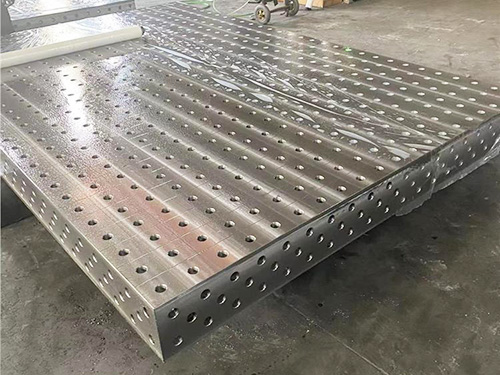
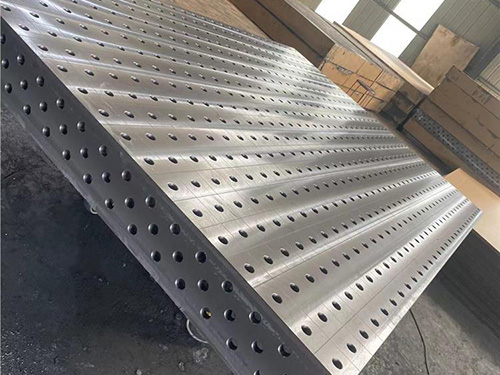
Welding tables provide a stable, flat surface for robots to position and weld parts with great accuracy. For robotic welding, precise alignment and consistency are crucial, as even slight deviations in positioning can lead to defects, inconsistencies, and rework. Welding tables designed specifically for robotic applications ensure that the parts being welded are held firmly in place, minimizing the risk of misalignment during the welding process.
These tables often come with adjustable fixtures, clamps, and supports that make it easier to set up and manipulate the workpieces, enabling the robotic system to execute welding tasks with extreme precision. Without a solid, stable base like a high-quality welding table, the robotic welder would be prone to errors that could disrupt the entire production process.
Benefits of High-Quality Welding Tables for Robotic Systems
·Increased Efficiency and Productivity
A well-designed welding table can improve the overall efficiency of robotic welding systems. With adjustable features that accommodate various sizes and shapes of workpieces, welding tables reduce the time needed for setup and adjustments. This means fewer delays in production, which is crucial for manufacturers looking to increase output.
·Improved Weld Quality
Consistency is key in welding, and a quality welding table ensures that the workpieces remain in the same position throughout the process. This constant stability minimizes variations in the welds, resulting in better overall quality. For robotic systems, this is especially important because robots rely on consistent programming and positioning to create high-quality welds.
·Enhanced Safety
A sturdy welding table can also enhance safety in robotic welding applications. With a firm grip on the workpieces, the risk of movement during the welding process is reduced, which helps prevent accidents. Many welding tables also come equipped with grounding systems, ensuring that the electrical flow during welding remains safe and efficient.
·Long-Term Durability
Industrial-grade welding tables are typically built to withstand the high stress and heat of robotic welding applications. They are made of heavy-duty materials such as steel, which can endure the impact and wear associated with repetitive welding tasks. A durable welding table can significantly extend the life of both the robotic system and the table itself, offering a long-term investment for any manufacturer.
Choosing the Right Welding Table: What to Look for
When selecting a welding table for robotic welding applications, there are several key factors to consider:
·Material Quality
The material of the welding table is one of the most important considerations. Steel is a popular choice due to its strength and ability to withstand high temperatures. However, other materials like aluminum and cast iron may also be suitable for specific applications, depending on the workpieces and type of welding being performed.
·Adjustability and Customization
For robotic welding, having a flexible and adjustable welding table is essential. Look for tables that allow easy customization to accommodate different workpiece sizes and shapes. Features like adjustable clamps, fixtures, and height adjustments can improve the efficiency and versatility of the welding process.
·Size and Weight Capacity
Ensure that the welding table you choose is large enough to accommodate your workpieces while providing enough room for robotic arms to maneuver. Additionally, check the weight capacity to ensure the table can handle the load of the workpieces, especially for heavy-duty applications.
·Compatibility with Robotic Systems
It’s important that the welding table integrates seamlessly with the robotic system. Ensure the table’s design allows for easy attachment of robotic arms and that it supports the necessary alignment mechanisms. Many manufacturers offer welding tables specifically designed for robotic applications, ensuring compatibility and enhanced performance.
·Supplier Reliability and Bulk Production
When selecting a welding table manufacturer, reliability is key. Choose a supplier that not only produces high-quality products but also offers bulk production capabilities, ensuring that you can scale your operations without any issues. A trusted manufacturer will provide consistent quality, delivery timelines, and after-sales support.
Conclusion: Elevating Robotic Welding with Superior Welding Tables
In summary, welding tables play a pivotal role in the success of robotic welding applications. By ensuring precision, improving productivity, and offering long-term durability, these tables form the foundation for high-quality welds and streamlined operations. When choosing the right welding table for your robotic system, consider factors like material quality, adjustability, and compatibility with your robotic setup.
By working with a reliable manufacturer that specializes in high-quality welding tables, you can enhance the efficiency and effectiveness of your robotic welding operations, taking your production capabilities to the next level. Whether you’re a large-scale manufacturer or a small production facility, investing in the right welding table is a crucial step toward achieving superior weld quality and improving overall operational success.
References
GB/T 7714:Semjon J, Hajduk M, Jánoš R, et al. Modular welding fixtures for robotic cells[J]. Applied Mechanics and Materials, 2013, 309: 80-87.
MLA:Semjon, Ján, et al. "Modular welding fixtures for robotic cells." Applied Mechanics and Materials 309 (2013): 80-87.
APA:Semjon, J., Hajduk, M., Jánoš, R., & Vagaš, M. (2013). Modular welding fixtures for robotic cells. Applied Mechanics and Materials, 309, 80-87.
 HOT PRODUCTS

 CONTACT US
—— E-mail:project@haoranmj.com
—— Whatsapp:+86 18932785670
—— Tel:+86 18932785670
—— Add:Across from Sanjing Distillery on Road 4, Botou Economic Development Zone, Cangzhou City, Hebei Province