







News Detail
Benefits of Using Cast Iron Measuring Working Platform in Workshop & Manufacturing
author:hxrtools Time:2026-04-02 08:10:05 Click:186
In the fast-paced world of workshop and manufacturing operations, precision, durability, and efficiency are non-negotiable. Every tool and piece of equipment plays a critical role in ensuring consistent quality, reducing downtime, and maximizing productivity. Among these essential tools, the cast iron measuring working platform stands out as a foundational component—one that delivers long-term value and addresses the unique challenges of industrial measurement and assembly. Whether you’re working with precision machining, quality inspection, or heavy-duty manufacturing tasks, integrating a cast iron measuring working platform into your workflow offers a range of benefits that directly impact your bottom line. Below, we break down the key advantages of using a cast iron measuring working platform in workshop and manufacturing environments, explaining why it’s a worthwhile investment for businesses looking to elevate their operations.

1. Unmatched Precision for Accurate Measurements
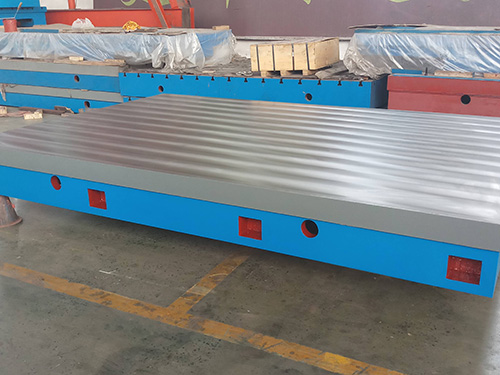
Precision is the cornerstone of manufacturing and workshop work—even the smallest deviation can lead to defective products, wasted materials, and costly rework. Cast iron, by its very nature, offers exceptional dimensional stability and flatness, making it the ideal material for measuring platforms. Unlike other materials (such as steel or aluminum) that may warp, bend, or expand under temperature changes, cast iron has a low coefficient of thermal expansion. This means it maintains its flatness and structural integrity even in harsh industrial environments, where temperature fluctuations, heavy loads, and constant use are common. High-quality cast iron measuring working platforms are precision-machined to meet strict flatness standards (often within 0.01mm per meter), ensuring that every measurement taken on the platform is accurate and reliable. This level of precision is critical for tasks like parts inspection, calibration, tool setup, and dimensional measurement—helping you maintain consistent product quality and meet industry standards.
2. Exceptional Durability & Longevity
Workshops and manufacturing facilities are high-wear environments, where tools and equipment are subjected to heavy loads, frequent use, and occasional impacts. Cast iron is renowned for its exceptional strength and durability, making cast iron measuring working platforms built to withstand the rigors of industrial use. The material’s high density and hardness resist scratches, dents, and deformation, even when used with heavy tools, large workpieces, or during high-pressure assembly tasks. Unlike wooden or plastic platforms that degrade over time, or steel platforms that are prone to rust and corrosion, cast iron measuring platforms are often treated with anti-rust coatings (such as galvanization or paint) to enhance their resistance to moisture, oil, and chemicals—common in manufacturing settings. With minimal maintenance (regular cleaning and occasional re-coating), a cast iron measuring working platform can last for decades, providing a long-term return on investment and reducing the need for frequent replacements.
3. Excellent Load-Bearing Capacity
Manufacturing and workshop tasks often involve heavy workpieces, large tools, or multiple components being measured or assembled at once. A cast iron measuring working platform’s robust construction allows it to handle high loads without bending or warping. The material’s inherent strength means it can support weights ranging from a few hundred pounds to several tons, depending on the platform’s size and design. This load-bearing capacity makes cast iron measuring platforms versatile for a wide range of applications: from measuring small precision parts to inspecting large machinery components, or even serving as a stable base for assembly tasks. Unlike lighter materials that may shift or flex under heavy loads (compromising measurement accuracy), cast iron platforms remain stable and rigid, ensuring consistent performance even under maximum load conditions.
4. Reduced Vibration for Stable Operation
Vibration is a common issue in workshops and manufacturing facilities, caused by nearby machinery, tool operation, or foot traffic. Even minor vibrations can disrupt precision measurements, leading to errors and inconsistencies. Cast iron’s high density and mass make it an excellent vibration dampener—absorbing and dissipating vibrations rather than transmitting them to the workpiece or measuring tools. This vibration-dampening property is critical for tasks that require extreme precision, such as calibration, micrometer measurements, or optical inspection. By minimizing vibration, a cast iron measuring working platform creates a stable working surface that ensures accurate readings, reduces errors, and improves the overall quality of your work.
5. Versatility Across Multiple Applications
A cast iron measuring working platform is not a one-trick pony—it adapts to a wide range of tasks in workshop and manufacturing environments. Its flat, stable surface makes it suitable for:
·Precision measurement and inspection of parts, components, and tools
·Calibration of measuring instruments (such as calipers, micrometers, and gauges)
·Assembly of small to large components, including machinery parts and equipment
·Tool setup and alignment for machining, welding, and other manufacturing processes
·Quality control checks to ensure products meet design specifications
Many cast iron measuring platforms also come with T-slots or grooves, allowing you to secure workpieces, clamps, or measuring tools in place—further enhancing their versatility and usability. This adaptability means you can use a single platform for multiple tasks, reducing the need for specialized equipment and saving space in your workshop.
6. Cost-Effective in the Long Run
While cast iron measuring working platforms may have a higher initial cost compared to platforms made from cheaper materials (such as wood or aluminum), their durability and longevity make them a cost-effective investment over time. Unlike cheaper platforms that need to be replaced every few years due to wear, warping, or damage, a cast iron platform can last for decades with minimal maintenance. Additionally, the precision and stability of cast iron platforms reduce the risk of errors, rework, and wasted materials—saving you money on production costs. By ensuring accurate measurements and consistent quality, you’ll reduce the number of defective products, improve customer satisfaction, and avoid the financial losses associated with rework or product recalls.
7. Compliance with Industry Standards
In many manufacturing industries—such as aerospace, automotive, medical device, and precision engineering—compliance with strict quality standards is mandatory. Cast iron measuring working platforms are designed to meet or exceed industry standards for flatness, precision, and durability, making them a reliable choice for businesses that need to adhere to regulatory requirements. Whether you’re required to meet ISO standards, ASTM specifications, or industry-specific regulations, a high-quality cast iron measuring platform ensures that your measurements and inspections are accurate and compliant. This not only helps you avoid penalties and fines but also enhances your business’s reputation as a provider of high-quality products.
Conclusion
A cast iron measuring working platform is more than just a work surface—it’s a foundational tool that enhances precision, durability, and efficiency in workshop and manufacturing operations. From unmatched accuracy and exceptional load-bearing capacity to vibration dampening and long-term cost savings, the benefits of integrating a cast iron measuring platform into your workflow are clear. Whether you’re a small workshop owner or a large manufacturing facility, investing in a high-quality cast iron measuring working platform will help you improve product quality, reduce downtime, and maximize productivity—ultimately driving growth and success for your business. Choose a platform that meets your specific needs (size, load capacity, precision level) and enjoy the long-term value it brings to your operations.
References
GB/T 7714:Effect of cryogenic treatment on microstructure and wear resistance of alloy cast iron. Journal of Mechanical Engineering
MLA:Processing parameters optimization of vibration casting. Special Casting & Nonferrous Alloys
APA:Development of the first international standard in the field of in-situ vibration calibration (ISO/DIS 16063-45). Metrology Journal of China
 HOT PRODUCTS

 CONTACT US
—— E-mail:project@haoranmj.com
—— Whatsapp:+86 18932785670
—— Tel:+86 18932785670
—— Add:Across from Sanjing Distillery on Road 4, Botou Economic Development Zone, Cangzhou City, Hebei Province