







News Detail
Granite Measuring Plates for Laboratory and Workshop Use
author:hxrtools Time:2026-02-09 02:16:58 Click:142
What Is a Granite Measuring Plate?
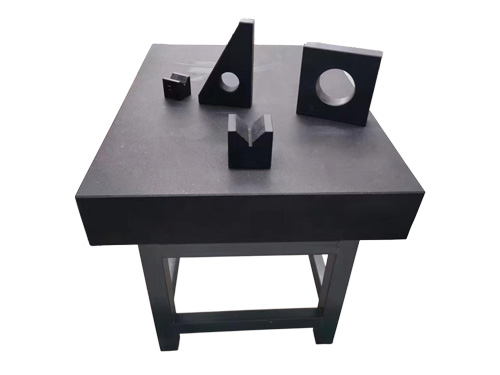
A granite measuring plate is a precision reference surface widely used in laboratories, calibration rooms, and industrial workshops. Its main function is to provide a perfectly flat and stable plane for inspection, layout marking, and dimensional measurement. Compared with metal alternatives, granite offers superior stability and resistance to environmental influence.
Granite measuring plates are typically manufactured from natural black granite with dense crystal structure. This structure allows the plate to remain dimensionally stable under temperature changes and long-term loading. Because of these advantages, granite measuring plates are considered essential tools for high-precision work environments.
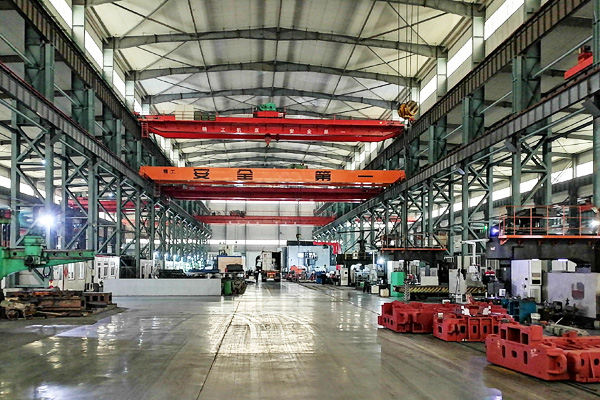
With professional factory production, each granite measuring plate is processed under strict control to ensure consistency in flatness and material performance.

Material Properties of Granite Measuring Plates
The performance of a granite measuring plate starts with the natural stone itself. High-density granite provides excellent hardness, low thermal expansion, and strong vibration damping. These properties are critical for maintaining measurement accuracy in both laboratory and workshop conditions.
Unlike steel, granite does not rust and does not require surface coatings. Its non-magnetic and corrosion-resistant nature makes it suitable for sensitive measuring equipment. The internal crystal structure absorbs micro-vibrations, allowing instruments to sit on a stable reference plane.
Through controlled manufacturer production, only selected stone blocks with uniform texture and minimal internal defects are processed into granite measuring plates, ensuring long-term reliability.
Accuracy Grades and Flatness Control
Accuracy is the defining feature of a granite measuring plate. During manufacturing, plates are lapped and polished to achieve specific flatness tolerances. These tolerances are commonly classified into grades depending on application needs, from general workshop inspection to laboratory-level calibration.
Flatness control ensures that measurements taken across the entire surface remain consistent. Even small deviations can introduce errors in height gauges, dial indicators, and coordinate measuring setups.
In professional environments, flatness is verified using optical instruments or electronic measuring systems during factory production. This ensures that every granite measuring plate meets its intended accuracy class before bulk supply and delivery.
Surface Finishing and Stability
The surface of a granite measuring plate must be smooth yet resistant to wear. Precision lapping removes surface irregularities while preserving structural integrity. A high-quality finish allows measuring tools to slide without resistance and prevents localized abrasion.
Stability is equally important. Granite’s natural mass minimizes deformation when equipment is placed on the surface. Unlike fabricated platforms, granite does not warp under normal loads, making it ideal for long-term reference use.
Protective edge chamfers and fine surface texture further improve usability and safety in daily workshop operations. Consistent production standards help maintain uniform finish quality across all granite measuring plates.
Production Process and Quality Assurance
The production of a granite measuring plate involves several controlled stages. It begins with stone selection, rough cutting, stress relief, precision grinding, and final lapping. Each stage contributes to the dimensional stability of the finished plate.
Stress relief allows the granite to stabilize before final machining. This prevents post-installation movement that could affect accuracy. After lapping, the surface is inspected for flatness, squareness, and overall geometry.
Through organized manufacturer factory systems, quality assurance includes visual inspection, dimensional testing, and documentation of tolerance compliance. This ensures predictable performance for laboratory and industrial users ordering in bulk.
Installation and Daily Maintenance
Correct installation is essential to maximize the accuracy of a granite measuring plate. The plate should be placed on a stable support frame with adjustable leveling points. Proper leveling prevents twisting and ensures that the flatness achieved during production is preserved in use.
Daily maintenance is simple but important. Dust, metal particles, and oils should be removed using non-abrasive cleaners. Sharp impacts should be avoided, as granite can chip if mishandled.
Regular recalibration schedules help maintain confidence in measurements, especially in laboratory environments where precision standards are critical. A well-maintained granite measuring plate can serve reliably for many years.
Manufacturer Production and Factory Supply Advantages
Sourcing a granite measuring plate from a professional manufacturer provides consistency that improvised solutions cannot match. Factory-controlled production ensures stable raw material selection, accurate machining, and repeatable surface finishing.
Through scalable factory supply, organizations can deploy identical plates across multiple labs or workshops, maintaining uniform inspection standards. Bulk production also improves cost efficiency while preserving quality and accuracy.
A structured production system ensures every granite measuring plate is delivered with verified performance and long-term dimensional stability.
Applications in Laboratories and Workshops
A granite measuring plate is widely used in calibration laboratories, metrology rooms, machine shops, and assembly workshops. In laboratories, it supports gauge blocks, height gauges, and optical measurement equipment.
In workshops, it provides a reliable surface for layout marking, component inspection, and part verification. Its vibration damping and corrosion resistance make it suitable for environments where temperature and humidity may vary.
Thanks to professional factory production and manufacturer support, granite measuring plates remain a core tool in precision engineering and industrial quality control.
Conclusion: Selecting the Right Granite Measuring Plate
Choosing the right granite measuring plate involves evaluating material quality, accuracy grade, surface finish, production process, and maintenance requirements. Each factor directly influences measurement reliability and long-term performance.
By working with dependable manufacturer production and stable factory supply systems, users gain access to granite measuring plates with consistent accuracy and structural stability.
A well-engineered granite measuring plate is more than a stone surface—it is the foundation of precision work in both laboratory and workshop environments.
References
GB/T 7714:de Bruin W, Meijer J. Analysis of flatness measurement and form stability of a granite surface plate[J]. CIRP annals: manufacturing technology, 1980, 29(16): 385-390.
MLA:de Bruin, W., and J. Meijer. "Analysis of flatness measurement and form stability of a granite surface plate." CIRP annals: manufacturing technology 29.16 (1980): 385-390.
APA:de Bruin, W., & Meijer, J. (1980). Analysis of flatness measurement and form stability of a granite surface plate. CIRP annals: manufacturing technology, 29(16), 385-390.
 HOT PRODUCTS

 CONTACT US
—— E-mail:project@haoranmj.com
—— Whatsapp:+86 18932785670
—— Tel:+86 18932785670
—— Add:Across from Sanjing Distillery on Road 4, Botou Economic Development Zone, Cangzhou City, Hebei Province