







News Detail
Marble Square Ruler: Precision, Structure, and Applications in Modern Engineering Measurement
author:hxrtools Time:2026-05-02 11:58:15 Click:54
This article comprehensively introduces the structure, working principle, advantages, and applications of marble square rulers in modern precision engineering and industrial quality control. In contemporary manufacturing, stone processing, and precision construction inspection, the marble square ruler serves as a crucial tool for ensuring geometric accuracy and verifying surface flatness. Renowned for its exceptional stability, wear resistance, and long-term dimensional reliability, it is extensively utilized in metrology laboratories and industrial quality control settings. This article offers a professional overview of the marble square ruler, covering its structure, operational mechanism, advantages, and practical applications in precision engineering.


1. What Is a Marble Square Ruler?
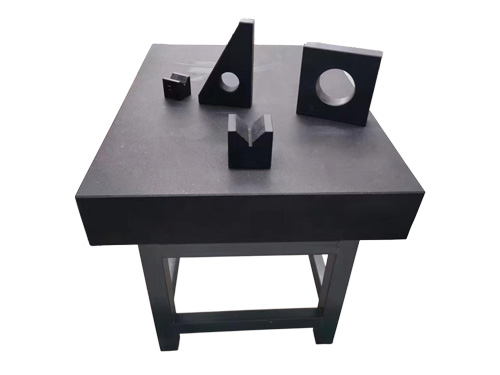
A marble square ruler is a high-precision measuring and inspection instrument crafted from natural granite or marble. Its primary function is to check the perpendicularity, flatness, and squareness of mechanical components and machined surfaces. Unlike metal rulers, the marble square ruler designed for precision measurement boasts superior stability, thanks to its natural stone composition. It is not affected by temperature fluctuations or corrosion, making it ideal for high-accuracy industrial environments. This tool is commonly employed in mechanical workshops, stone fabrication facilities, and metrology inspection rooms where dimensional accuracy is of utmost importance.
2. Material Characteristics and Structural Properties
The performance of a marble square ruler is closely tied to the physical properties of natural granite or marble. High-quality measuring rulers are typically made from fine-grained black granite, which is valued for its hardness, density, and low thermal expansion coefficient. Key material properties include: high hardness and wear resistance, excellent dimensional stability, low thermal deformation, and non-magnetic, non-rusting characteristics. From a structural perspective, the marble square ruler undergoes careful grinding and lapping to achieve extremely tight tolerances. Each surface is processed to ensure perfect perpendicularity and flatness—essential requirements for accurate measurement.
3. Working Principle of Marble Square Ruler
The working principle of a marble square ruler is based on geometric comparison and reference alignment. It acts as a master reference tool to assess whether a workpiece meets the required perpendicularity and squareness standards. During inspection, the ruler is placed against a machined surface; any gap or deviation between the ruler and the workpiece indicates an angular or geometric error. This allows engineers to detect alignment issues either visually or with the aid of instruments. In precision engineering, the operational principle of the marble square ruler ensures the reliable transfer of geometric standards from the reference tool to the manufactured part.
4. Advantages of Marble Square Ruler in Industrial Use
One of the primary advantages of the marble square ruler is its exceptional dimensional stability. Unlike metal tools, it is not susceptible to rust, deformation, or thermal expansion under normal working conditions. Key advantages include: extremely high precision and stability, long service life with minimal wear, resistance to corrosion and environmental changes, suitability for high-accuracy inspection tasks, and consistent flatness over long-term use. Additionally, the granite square ruler maintains consistent measurement accuracy even in demanding industrial environments, making it a preferred tool in quality assurance systems.
5. Applications in Manufacturing and Engineering
The marble square ruler is widely used across various industrial sectors. In mechanical manufacturing, it is used to inspect machine parts, guide rails, and assembly structures to ensure correct angular alignment. In the stone processing industry, it is essential for checking the squareness of marble slabs, granite countertops, and architectural stone products. It is also extensively used in precision mold manufacturing, where strict dimensional control is mandatory. In metrology laboratories, the marble inspection ruler system serves as a standard reference tool for calibration and quality verification.
6. Comparison with Metal Measuring Tools
Compared to steel or aluminum rulers, the marble square ruler offers significantly higher dimensional stability. Metal tools are prone to thermal expansion, rust, and deformation over time, which can compromise measurement accuracy. In contrast, granite-based rulers maintain stable geometry under varying environmental conditions, making them more suitable for long-term precision inspection tasks. While metal tools may be more impact-resistant, the marble square ruler for precision inspection is preferred in applications where accuracy takes precedence over mechanical toughness.
7. Maintenance and Calibration Requirements
Proper maintenance is crucial to ensuring the long-term accuracy of a marble square ruler. Its surface should be kept clean and free from dust, oil, or abrasive particles that could affect measurement precision. The ruler should be stored on a stable, vibration-free surface to avoid accidental damage. Regular calibration against certified standards is recommended to maintain consistent accuracy in industrial use. Although granite is highly durable, impact or improper handling may cause edge chipping, which can impair measurement performance.
8. Importance in Quality Control Systems
In modern quality control systems, the marble square ruler plays a pivotal role in ensuring product consistency and dimensional accuracy. It serves as a fundamental reference tool in inspection workflows. By providing a stable geometric reference, it helps manufacturers reduce assembly errors, improve product reliability, and maintain compliance with engineering standards. Its role in precision measurement and industrial inspection systems makes it an essential tool in high-end manufacturing environments.
Conclusion
The marble square ruler is a critical precision measurement tool widely used in mechanical engineering, stone processing, and industrial quality control. With its exceptional stability, high accuracy, and long-term durability, it provides a reliable reference for geometric inspection. By understanding its material properties, working principle, and applications, engineers and quality inspectors can ensure more accurate measurement results and enhance manufacturing quality. In modern precision industries, the marble square ruler remains an indispensable tool for upholding strict dimensional standards.
References
GB/T 7714:Dimensional Stability and Precision Performance of Marble Square Rulers in Industrial Metrology. Measurement
MLA:Maintenance and Calibration of Marble Square Rulers in Metrology Laboratories. Precision Engineering
APA:Material Properties of Fine-Grained Granite for High-Precision Marble Square Rulers. Construction and Building Materials
 HOT PRODUCTS
 CONTACT US
—— E-mail:project@haoranmj.com
—— Whatsapp:+86 18932785670
—— Tel:+86 18932785670
—— Add:Across from Sanjing Distillery on Road 4, Botou Economic Development Zone, Cangzhou City, Hebei Province