







News Detail
Modular Welding Table Flexibility: Improving Workflow Efficiency and Reducing Setup Time
author:hxrtools Time:2026-06-24 07:14:01 Click:102
Modular Welding Table Flexibility: Improving Workflow Efficiency and Reducing Setup Time
Fabrication shops constantly balance conflicting demands: maintain quality, reduce costs, shorten lead times, and handle diverse customer requirements. Traditional welding setups often force shops to choose between these goals. Modular welding tables resolve this conflict by providing adaptable workholding that accommodates changing requirements without sacrificing precision or productivity. The result is a leaner, more responsive welding operation.
The True Cost of Traditional Setup Methods
In traditional welding setups, setup time often exceeds actual welding time—particularly for complex assemblies or low-volume production. A typical scenario sees a fabrication shop welder spend two hours positioning and clamping parts to produce 30 minutes of actual welding. This pattern repeats across countless shops, and the wasted hours represent pure lost capacity: time that could produce revenue but instead gets consumed by repositioning, measuring, and tweaking workpiece alignment. Modular welding tables attack this inefficiency directly: standardized clamping points, quick-action fixtures, and repeatable positioning references compress setup from hours to minutes. Welders spend their time welding rather than wrestling with workpiece positioning, and the productivity gains are immediate and substantial throughout the fabrication process.
Quick Changeover Between Jobs
Job shops live or die by their ability to handle diverse work streams efficiently. Modular tables solve this through component standardization: clamps, locators, and supports used for one job work equally well for the next, just arranged differently. An operator finishes welding a bracket, removes the clamps in two minutes, and reconfigures them for a pipe assembly in another three minutes. The speed of changeover transforms scheduling flexibility—when a rush order arrives, it goes into production immediately; when a customer requests a design change, the fixture adapts in minutes rather than days.
Smart shops develop fixture libraries for their most common assemblies. Operators retrieve documented setup sheets showing optimal clamp positions, component selections, and tightening sequences. Photographing completed fixtures for visual reference further reduces changeover time while ensuring consistent quality across repeat orders. These libraries become institutional knowledge that survives personnel changes.
Lean Manufacturing Principles in Welding
Lean manufacturing targets waste in all forms: waiting time, excess inventory, unnecessary motion, defects, and underutilized talent. Modular tables address multiple wastes simultaneously. Waiting waste disappears when fixtures configure rapidly—welders move from one job to the next without waiting for setup personnel. Inventory waste reduces because modular clamps serve infinite configurations instead of requiring dozens of dedicated fixtures that occupy space and tie up capital. Motion waste decreases through thoughtful table design: clamping points within easy reach, components stored in organized cabinets adjacent to the welding station, and standardized procedures that develop operator muscle memory. The cumulative effect is smoother workflow with less physical strain and higher throughput.
Workflow Efficiency in Practice
Theoretical benefits matter less than practical results. In traditional shops, complex welded assemblies move through multiple stations—layout, tack welding, final welding, inspection—each transfer risking dimensional accuracy. Modular tables enable single-station workflows: the same table hosts layout through inspection using portable measuring tools, with the fixture intact throughout to ensure consistent datums.
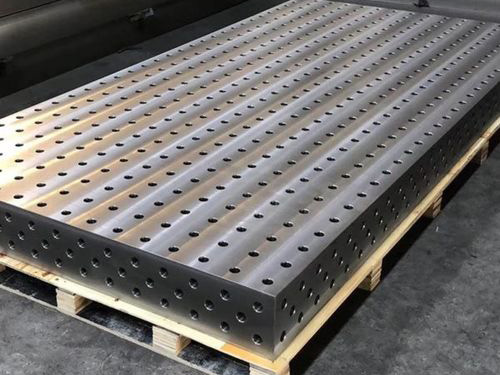
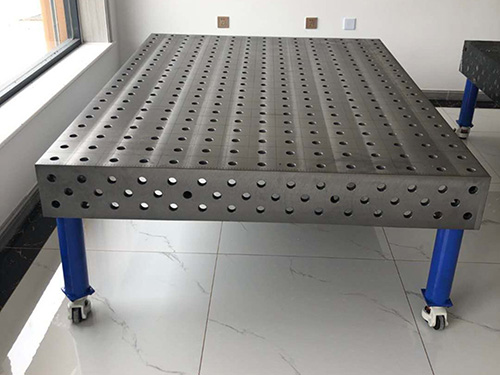
Batch production benefits significantly. When producing identical assemblies, modular fixtures stay in place while workpieces cycle through. Operators develop rhythm and efficiency, positioning each new workpiece against the same locators, tightening the same clamps, welding with the same sequences. The consistency improves quality while reducing fatigue through repetitive, optimized motions. Tables with T-slot or grid hole configurations also accept automation accessories like positioners and robotic end-effector mounts—enabling evolution from manual station to automated cell without replacing the initial investment.
Selecting Modular Systems for Maximum Flexibility
Not all modular welding tables deliver equal flexibility. Key differentiators include hole pattern density, component ecosystem breadth, and build quality. Tables with 50mm grid patterns offer finer positioning resolution than 100mm grids—though at higher cost—and the optimal choice depends on typical workpiece sizes and precision requirements. Component availability influences long-term flexibility: a supplier offering extensive catalogs of clamps, locators, and supports provides more adaptation potential than one with limited options. A table is only as flexible as its ecosystem of compatible components.
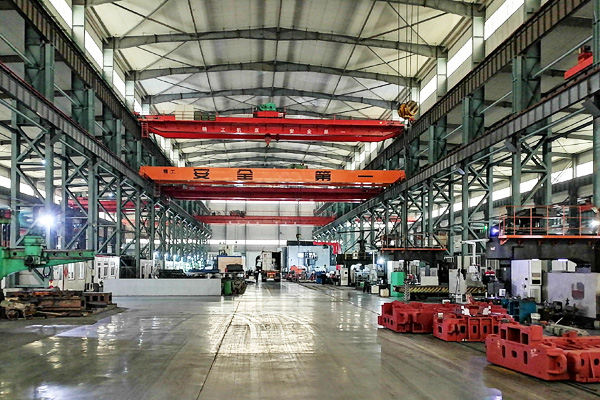
Build quality determines whether the table remains accurate through years of reconfiguration. Frequent clamp removal eventually wears hole edges or slot surfaces. Quality tables use hardened surfaces or replaceable wear plates at clamping points; inferior tables develop slop that degrades positioning repeatability. Manufacturing capability signals supplier reliability: companies operating their own foundries, CNC machining centers, and quality inspection equipment control their supply chain and maintain consistent product quality. For workshops depending on modular systems for daily production, supplier stability directly impacts operational continuity and long-term fixture investment protection.
References
Lean Manufacturing for the Fabrication Shop, Fabricators & Manufacturers Association
Welding Productivity and Cost Control, American Welding Society
ISO 9001:2015 Quality Management Systems - Requirements
Modern Welding Technology, 4th Edition, Pearson Education
 HOT PRODUCTS

 CONTACT US
—— E-mail:project@haoranmj.com
—— Whatsapp:+86 18932785670
—— Tel:+86 18932785670
—— Add:Across from Sanjing Distillery on Road 4, Botou Economic Development Zone, Cangzhou City, Hebei Province