







News Detail
Comprehensive Guide to 3D Flexible Welding Platform Systems
author:hxrtools Time:2026-07-03 09:46:46 Click:80
Modern fabrication shops face increasing pressure to deliver high-precision welded assemblies while maintaining flexibility for diverse project requirements. Traditional welding tables, with their fixed configurations and limited adaptability, often become bottlenecks in production workflows. The emergence of 3D flexible welding platform systems has fundamentally changed how manufacturers approach fixture design and welding operations.
Understanding Modular Design Philosophy
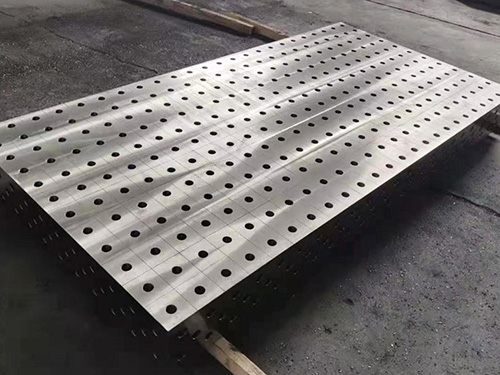
A 3D flexible welding platform operates on a simple premise: provide a standardized grid of holes across a flat working surface, then supply compatible components that lock into these holes to create virtually any fixture configuration. This modular approach transforms a single table into hundreds of potential setups, eliminating the need for dedicated fixtures for each new project.
The grid hole pattern typically follows a 50mm spacing arrangement, with 100mm variants available for heavier workpieces. Each hole features precision machining ensuring consistent positioning accuracy. A workshop investing in such a system acquires a universal fixture-building toolkit adaptable to components ranging from small brackets to massive structural assemblies.
Grid Hole Patterns and Dimensional Accuracy
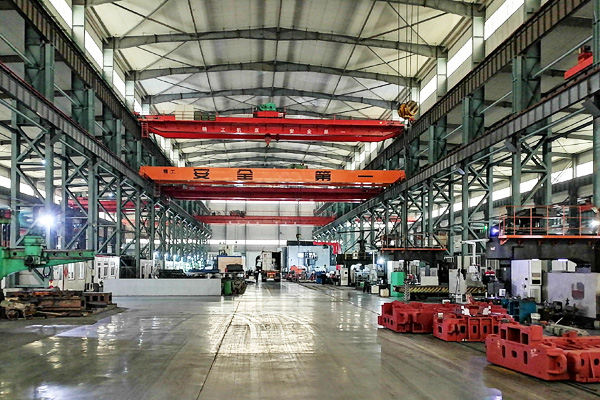
Precision defines the value proposition of any 3D welding platform. The holes must maintain positional accuracy within tight tolerances—typically ±0.05mm per meter across the entire table surface. Achieving this requires stress-relieved castings, CNC machining with 3D coordinate detection, and advanced inspection systems. Leading manufacturers employ Swedish 3D coordinate detectors and blue-ray scanning technology during production, with foundries operating 8-ton and 10-ton cupolas producing base plates that undergo artificial aging treatment to eliminate internal stresses. Surface hardness typically falls within HB170-210, balancing durability with machinability to withstand years of fixture clamping and workpiece contact.
Building Fixtures with Speed and Precision
Traditional fixture fabrication often requires days or weeks of planning, machining, and assembly. A 3D flexible system compresses this timeline dramatically. An experienced operator can configure a complete fixture for a moderately complex welded assembly in under two hours, using standard components like locating pins, support blocks, clamps, and adjustable feet.
The fixture-building process follows a logical sequence: identify primary datum points, select corresponding grid hole positions, then install locating elements and clamps to secure the workpiece. Throughout this process, the 50mm grid provides reference points ensuring repeatability across multiple setups. Suppliers typically provide extensive catalogs—from basic locating pins to complex angle plates and height adjusters—and a well-stocked workshop maintains component inventory proportional to table capacity, ensuring fixture builders have the parts they need when they need them.
Comparing 3D Platforms with Traditional Welding Tables
Fixed welding tables serve adequately for repetitive production of identical parts. When a fabrication shop focuses on custom work, prototype development, or low-volume batch production, the limitations become apparent quickly. Each new part shape demands either a new dedicated fixture or time-consuming manual positioning that compromises repeatability.
3D flexible platforms eliminate this trade-off. The same surface that secured a robotic welding sub-assembly yesterday can host a shipbuilding bracket today and an aerospace fixture tomorrow. From a workshop management perspective, the space savings alone justify the investment—instead of storing dozens of dedicated fixtures, a fabrication shop needs only the 3D platform and a cabinet of modular components. This versatility proves especially valuable for job shops serving multiple industries where workpiece diversity prevents economical investment in dedicated tooling.
Applications Across Precision Industries
The aerospace sector demands extraordinary precision in welded assemblies, where thermal distortion must be controlled within fractions of a millimeter. 3D flexible platforms, with their stress-relieved construction and precision-ground surfaces, provide the stable foundation required for such critical work. Fixture builders incorporate adjustable locating points that compensate for expected thermal expansion, ensuring final assemblies meet specification despite welding heat input.
Shipbuilding presents different challenges: massive workpieces, harsh conditions, and the need for robust, repeatable fixtures. Here, the modular nature of 3D platforms shines—multiple tables bolt together to create expansive working surfaces, with the grid hole pattern ensuring that fixtures built on one section align perfectly with those on adjacent sections.
Automotive manufacturing benefits from quick-changeover capability. When production schedules demand rapid transitions between different welded assemblies, operators disassemble the current fixture and build the next one—no waiting for custom fixtures from the machine shop, no compromising quality due to makeshift positioning.
Manufacturing Quality and Supply Chain Considerations
Fabrication shops evaluating 3D flexible welding platforms should assess the manufacturing capabilities behind the product. The best platforms come from suppliers controlling the entire production process: in-house foundries, CNC machining centers, and coordinate measuring equipment for quality verification.
Annual casting production capacity provides one indicator of supplier stability. Facilities producing 5,000+ tons of castings annually demonstrate the scale necessary to maintain consistent supply and competitive pricing. Additionally, advanced equipment like Norwegian high-frequency quenching machines for surface hardening and Swedish blue-ray scanners for dimensional verification signal a commitment to quality that directly impacts the end-user experience.
When selecting a manufacturer, verify their quality control processes: artificial aging on castings to prevent warping, 3D coordinate detection for hole pattern accuracy, and material certifications for their castings. Advanced equipment like Norwegian high-frequency quenching machines for surface hardening and Swedish blue-ray scanners for dimensional verification signal a commitment to quality. These questions separate suppliers offering genuine precision tools from those providing mere welded steel tables with holes drilled in them.
References
Welding Fixture Design and Application, 3rd Edition, Lincoln Electric Welding School
ASME B46.1-2019: Surface Texture (Surface Roughness, Waviness, and Lay)
ISO 8512-1:2018: Surface Plates - Part 1: Cast Iron Surface Plates
Welding Handbook, Volume 1: Welding Science and Technology, American Welding Society
 HOT PRODUCTS

 CONTACT US
—— E-mail:project@haoranmj.com
—— Whatsapp:+86 18932785670
—— Tel:+86 18932785670
—— Add:Across from Sanjing Distillery on Road 4, Botou Economic Development Zone, Cangzhou City, Hebei Province