







News Detail
What Real Changes Can a 3D Welding Platform Bring to Your Welding Workshop
author:hxrtools Time:2026-05-23 20:30:53 Click:145
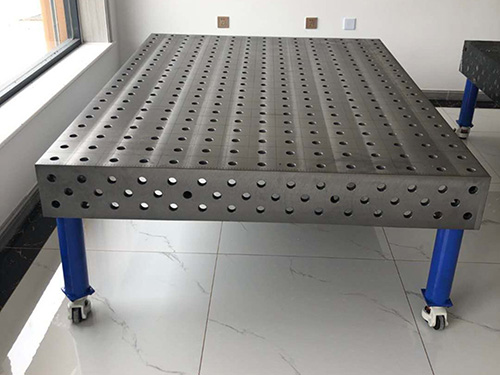
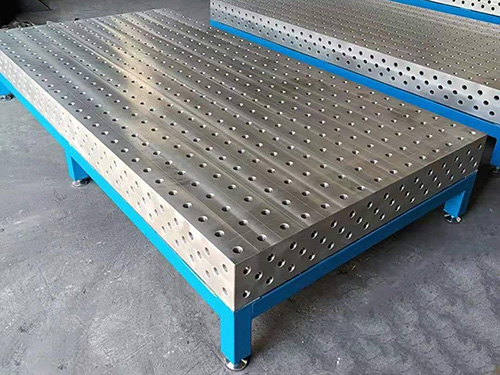
In contemporary fabrication and metalworking industries, efficiency, precision, and flexibility are no longer optional extras—they are absolute necessities. One of the most impactful upgrades a workshop can make today is investing in a 3D welding platform. Unlike conventional flat workbenches, a 3D welding platform revolutionizes the way welding, assembly, and positioning tasks are carried out, delivering measurable improvements in both productivity and product quality. But what tangible changes can this equipment actually bring to your workshop? Let’s break down its key benefits in detail.
1. Dramatically Enhanced Welding Precision
A 3D welding platform is equipped with a modular, multi-directional clamping system, enabling operators to secure workpieces at any angle with exceptional accuracy. This eliminates the need for guesswork and reduces the frequency of manual adjustments during the welding process. The results are clear:
Weld alignment becomes far more consistent
Dimensional errors are cut down significantly
Rework rates decrease noticeably
For workshops that handle complex structural components, the improvement in precision alone is enough to justify the investment in a 3D welding platform.
2. Quicker Setup and Shorter Production Cycles
Traditional welding setups often involve time-consuming measuring, repositioning, and re-clamping processes. In contrast, a 3D welding platform utilizes standardized holes and modular fixtures, making setup procedures fast and repeatable. This translates to:
Reduced preparation time prior to welding
Faster switching between different workpiece types
Higher daily output with the same number of workers
In today’s competitive manufacturing landscape, saving even 10–20 minutes per job can add up to substantial productivity gains over the long term.
3. Greater Flexibility for Complex Projects
Modern fabrication work is rarely repetitive. Many workshops deal with customized frames, machinery components, or structural assemblies that require versatile handling. A 3D welding platform offers the flexibility to meet these demands by supporting:
Multi-angle positioning (including horizontal, vertical, and diagonal orientations)
Modular extensions to accommodate larger structures
Compatibility with a wide range of clamps, stops, and fixtures
This versatility allows a single workstation to handle multiple project types without the need for additional tooling or equipment.
4. Superior Welding Quality and Structural Strength
When workpieces are securely fixed and precisely aligned, the quality of welding naturally improves. A stable setup minimizes vibration and movement during the welding process, leading to:
Stronger, more durable weld seams
Cleaner finishes with less spatter
Reduced internal stress in the welded structures
For industries such as automotive manufacturing, steel fabrication, and machinery production, this improvement in quality directly impacts the reliability and longevity of the final products.
5. Reduced Labor Intensity and Operator Fatigue
Manually holding, adjusting, and re-measuring workpieces not only slows down production but also increases worker fatigue. A 3D welding platform reduces physical strain by mechanically stabilizing components, offering the following benefits:
Less repetitive manual positioning work
Easier handling of heavy or complex parts
Improved workplace safety and ergonomics
This also helps reduce the risk of long-term occupational injuries in welding environments.
6. Standardization of Production Processes
One of the most significant advantages of a 3D welding platform is the standardization it brings to production processes. Once fixtures and positioning methods are set, different operators can achieve consistent results, ensuring:
Uniform product quality across all batches
Simplified training for new workers
Easier documentation of workflow procedures
For growing workshops, this standardization is essential for scaling production without compromising on quality.
7. Long-Term Cost Efficiency
While the initial investment in a 3D welding platform may be higher than that of a traditional workbench, the long-term cost savings are substantial:
Reduced material waste due to fewer errors
Lower costs associated with rework and corrections
Increased production output without adding extra labor
Extended tool lifespan thanks to stable operation
Over time, the efficiency gains from the platform will offset the initial cost, making it a cost-effective investment.
Conclusion
A 3D welding platform is more than just an upgraded workbench—it represents a complete transformation of the welding workflow. It enhances precision, speeds up production, boosts flexibility, and reduces operational costs. For workshops looking to remain competitive in modern manufacturing, adopting a 3D welding platform is a strategic step forward. If your workshop is still relying on traditional flat tables, upgrading to a 3D welding platform could be the key change that unlocks a new level of productivity and quality.
References
GB/T 7714:The Impact of 3D Welding Platforms on Welding Precision and Production Efficiency. Journal of Fabrication and Metalworking Technology
MLA:Cost-Benefit Analysis of 3D Welding Platforms in Modern Workshops. Industrial Engineering and Management Journal
APA:Standardization of Welding Processes Using 3D Modular Platforms. Journal of Manufacturing Systems
 HOT PRODUCTS

 CONTACT US
—— E-mail:project@haoranmj.com
—— Whatsapp:+86 18932785670
—— Tel:+86 18932785670
—— Add:Across from Sanjing Distillery on Road 4, Botou Economic Development Zone, Cangzhou City, Hebei Province