







News Detail
Why More Factories Are Choosing 3D Welding Platforms for Standardized Production
author:hxrtools Time:2026-05-27 08:46:22 Click:68
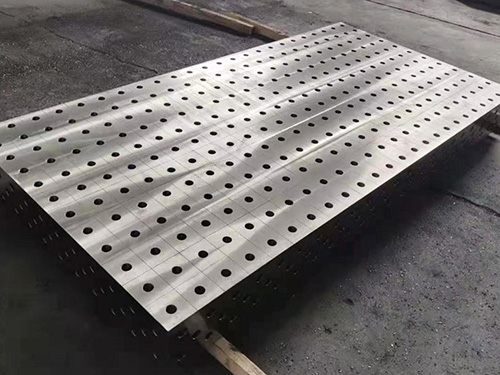
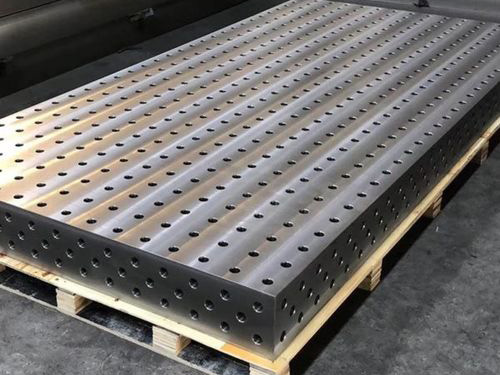
As manufacturing industries keep striving for higher efficiency and better product consistency, an increasing number of factories are upgrading their workshop equipment to meet the demands of modern production. Among these upgrades, the 3D welding platform has emerged as a highly popular solution for companies focused on standardized production and precision fabrication. From metal structure manufacturing and machinery assembly to automotive component fabrication, 3D welding platforms are helping factories optimize workflows, reduce errors, and achieve stable production quality.
The Growing Demand for Standardized Production
In today’s fiercely competitive industrial market, customers have clear expectations:
Consistent product quality
Quicker delivery times
Accurate dimensions and assembly precision
Lower production costs
Traditional welding tables and manual positioning methods often fall short of these expectations, particularly when factories handle large production volumes or customized metal structures. A 3D welding platform addresses many of these challenges by providing a flexible yet highly standardized working system.
What Sets a 3D Welding Platform Apart?
Unlike conventional welding tables, a 3D welding platform is engineered with the following key features:
Precision-machined grid holes
Modular fixture systems
Multi-angle positioning capabilities
Flexible clamping components
These features enable operators to quickly position and secure workpieces with repeatable accuracy. The platform can support welding, inspection, assembly, and fixture installation all within a single integrated workspace, making it well-suited for modern manufacturing environments.
Enhanced Production Consistency
One of the primary reasons factories adopt 3D welding platforms is their ability to maintain consistent product quality. Thanks to standardized fixtures and positioning systems:
Every workpiece is aligned in the same precise manner
Human measurement errors are minimized
Welding dimensions remain stable across all production batches
This level of consistency is particularly crucial in industries where precision directly influences the performance of the final product.
Faster Setup and Greater Efficiency
Production efficiency is another major benefit offered by 3D welding platforms. Traditional welding setups often involve repeated measuring and manual adjustments, which waste valuable production time. With a 3D welding platform:
Fixture installation becomes much faster
Repositioning time is greatly reduced
Operators can switch between different projects more efficiently
For factories that handle multiple product types, this flexibility significantly boosts overall workshop productivity.
Flexibility for Both Mass Production and Custom Fabrication
Modern factories rarely focus on producing just one type of product. Many workshops need equipment that can support:
Small-batch custom fabrication
Large-scale standardized production
Complex frame structures
Multi-angle welding projects
A 3D welding platform can easily adapt to these diverse production requirements by changing fixture combinations and clamping positions. This versatility helps manufacturers reduce equipment investment while expanding their workshop capabilities.
Reduced Rework and Material Waste
Incorrect positioning and unstable fixtures often lead to welding defects, dimensional deviations, and costly rework. By improving positioning accuracy and workpiece stability, 3D welding platforms help factories:
Lower scrap rates
Reduce material waste
Minimize post-welding corrections
Enhance overall production reliability
These savings can greatly improve long-term operational efficiency.
A Better Working Environment for Operators
Modern manufacturing also places great emphasis on worker safety and ergonomics. A well-designed 3D welding platform helps reduce:
Excessive manual handling of workpieces
Repetitive repositioning tasks
Operator fatigue during long production cycles
This creates a safer and more organized workshop environment while also improving overall work efficiency.
Supporting the Development of Smart Manufacturing
As factories move toward automation and intelligent manufacturing systems, modular welding solutions are becoming increasingly important. 3D welding platforms can be seamlessly integrated with:
Robotic welding systems
CNC processing workflows
Automated fixture management
Digital production systems
This makes them a valuable foundation for future smart factory upgrades.
Conclusion
The growing popularity of 3D welding platforms is not merely a passing trend—it reflects the actual needs of modern manufacturing. Factories today require higher precision, faster production, lower costs, and more standardized workflows. By improving positioning accuracy, reducing setup time, and supporting flexible production, 3D welding platforms help manufacturers efficiently achieve these goals. For factories seeking long-term competitiveness and production stability, investing in a 3D welding platform is becoming an increasingly practical and strategic decision.
References
GB/T 7714:The Impact of 3D Welding Platforms on Welding Precision and Production Efficiency. Journal of Fabrication and Metalworking Technology
MLA:Ergonomic Advantages of 3D Welding Platforms in Reducing Operator Fatigue. Journal of Occupational Safety and Health
APA:Standardization of Welding Processes Using 3D Modular Platforms. Journal of Manufacturing Systems
 HOT PRODUCTS

 CONTACT US
—— E-mail:project@haoranmj.com
—— Whatsapp:+86 18932785670
—— Tel:+86 18932785670
—— Add:Across from Sanjing Distillery on Road 4, Botou Economic Development Zone, Cangzhou City, Hebei Province