







News Detail
Why Precision Welding Depends on a Stable Welding Table Platform
author:hxrtools Time:2026-05-17 17:53:20 Click:106
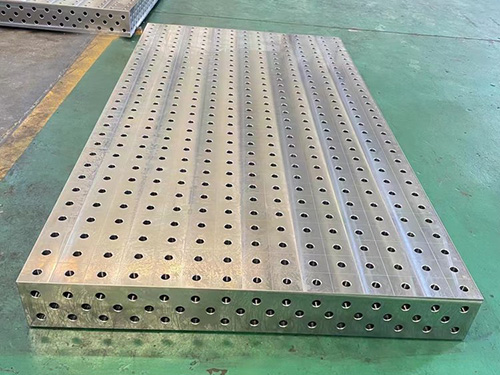
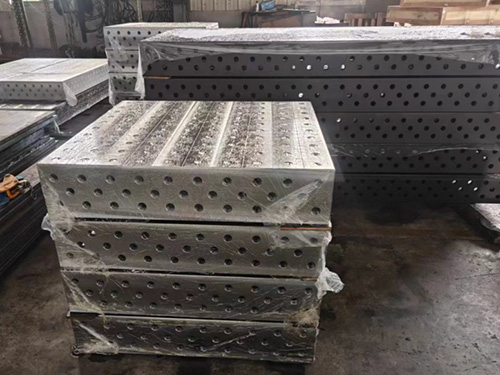
In precision welding operations, even the slightest deviation can result in component misalignment, fragile weld joints, or expensive rework costs. While numerous factors—including operator proficiency, welding equipment quality, and raw material standards—impact weld quality, one fundamental factor is often undervalued: the stability of the welding table platform. A stable welding table is more than just a simple supporting surface; it serves as the core foundation for accuracy, consistency, and operational efficiency in all fabrication processes. Below, we examine the reasons why precision welding relies so heavily on a sturdy, dependable table platform.
1. Stability Guarantees Precise Component Alignment
Precision welding demands the exact positioning of workpieces. If the table surface is unstable or uneven, even parts that have been accurately measured may shift during setup or the welding process itself. A stable welding table keeps workpieces firmly fixed in place, maintains their alignment throughout the entire welding operation, and prevents dimensional inaccuracies. Without such a reliable base, achieving strict tolerance requirements becomes considerably more challenging.
2. Mitigates Vibration and Unwanted Movement
Vibrations are common during welding, particularly when using heavy equipment or handling large components. An unstable table amplifies these movements, which in turn negatively affects weld quality. A rigid, well-constructed welding platform absorbs and minimizes vibrations, prevents micro-movements that lead to weld defects, and enhances overall weld consistency. This is especially crucial for high-precision or repetitive welding tasks where consistency is paramount.
3. Sustains Surface Flatness Under Load
Flatness is a key requirement for precision fabrication work. A weak or low-quality welding table may warp or bend when subjected to heavy loads or high welding temperatures. A stable welding table platform retains its flatness even when supporting heavy workpieces, ensures uniform contact between components, and facilitates accurate assembly and welding. Consistent flatness directly translates to better part fit-up and cleaner, more reliable welds.
4. Enables Dependable Fixturing and Clamping
Precision welding often involves complex setups that utilize clamps and fixtures, and these tools rely on a solid base to function effectively. With a stable table, clamps can hold workpieces securely without shifting, fixtures maintain exact positioning, and setup repeatability is significantly improved. This allows welders to replicate high-quality results with confidence, especially in batch production scenarios where consistency across parts is essential.
5. Reduces the Impact of Thermal Distortion
Welding generates intense heat that can cause materials to expand and deform. An unstable table can exacerbate these thermal effects. A heavy, stable welding platform acts as a heat sink to dissipate excess temperature, reduces uneven expansion of workpieces, and helps maintain their original shape during and after welding. This ultimately leads to improved dimensional accuracy of the finished products.
6. Boosts Workflow Efficiency
An unstable table often requires constant readjustment, which slows down the entire workflow. In contrast, a stable welding table reduces setup time, eliminates the need for frequent repositioning of workpieces, and enables smoother, more efficient operations. This not only enhances productivity but also reduces operator fatigue, allowing for sustained high performance throughout the workday.
7. Enhances Production Repeatability
In industrial manufacturing environments, consistency is just as important as accuracy. A stable welding platform enables identical setups for repeated jobs, ensures uniform weld quality across multiple parts, and minimizes human error. This is essential for manufacturers striving to produce standardized, high-quality output that meets strict industry standards.
8. Minimizes Errors and Rework
Instability in the welding surface is a common cause of errors such as component misalignment or insufficient weld penetration. By using a stable welding table, errors are minimized at the source, rework and material waste are reduced, and overall production costs are lowered. Better stability directly translates to improved first-pass success rates, saving both time and resources.
9. Improves Workplace Safety and Operator Control
A secure, stable work surface is a key contributor to a safer working environment. The benefits include a reduced risk of workpieces slipping during welding, better operator control over the welding process, and increased confidence among workers. In professional welding operations, safety and precision are closely intertwined, and a stable table helps ensure both.
Conclusion
Precision welding is built on three core pillars: accuracy, consistency, and control—and all three depend heavily on the stability of the welding table platform. From maintaining component alignment and surface flatness to supporting effective fixturing and reducing vibration, a stable table plays a critical role in achieving high-quality weld results. For any workshop focused on precision and efficiency, investing in a strong, rigid, and stable welding table platform is not an option—it is a necessity. A solid foundation ensures not only better welding outcomes but also long-term productivity gains and cost savings. </>
References
GB/T 7714:The Influence of Welding Table Stability on Precision Welding Quality. Journal of Welding Technology
MLA:Thermal Distortion Mitigation in Precision Welding Using Stable Heavy-Duty Tables. Materials and Manufacturing Processes
APA:Vibration Control in Precision Welding: The Role of Stable Table Platforms. International Journal of Precision Manufacturing
 HOT PRODUCTS

 CONTACT US
—— E-mail:project@haoranmj.com
—— Whatsapp:+86 18932785670
—— Tel:+86 18932785670
—— Add:Across from Sanjing Distillery on Road 4, Botou Economic Development Zone, Cangzhou City, Hebei Province