







News Detail
Stress Relief and Vibration Ageing in Cast Iron Platform Manufacturing
author:hxrtools Time:2026-11-15 22:07:40 Click:99
Every cast iron platform begins as a molten pour carrying enormous internal stress. What happens between that pour and the finished surface determines whether the plate is stable for decades or creeps out of tolerance within months. Stress relief and ageing are the least visible — and most decisive — steps in platform manufacturing, and they are also the easiest for a low-cost supplier to skip.
Why Castings Carry Stress
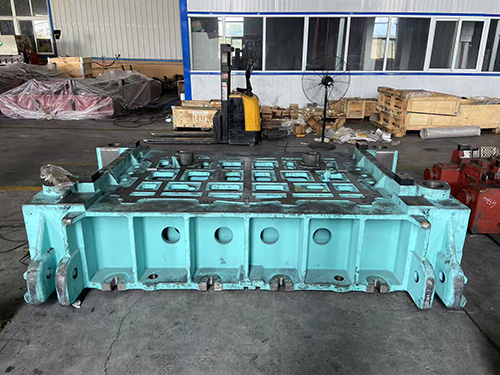
During solidification, different sections of a casting cool at different rates. Thin ribs freeze first, thick sections last, and the resulting differential contraction locks residual stress into the structure. If that stress is not removed before finish machining, it will relax slowly over the following months and years — and the surface the machinist cut perfectly flat will not stay flat.
Stress Relief Methods Compared
| Method | Mechanism | Typical use |
|---|---|---|
| Natural ageing | Outdoor storage over months, slow relaxation | Large one-off castings, long lead time |
| Thermal ageing (annealing) | Controlled heating and slow furnace cooling | High-precision machine tool castings |
| Vibration ageing (vibratory stress relief) | Resonant vibration redistributes residual stress | Large weldments and platforms, fast cycle |
Casting Method: Resin Sand vs Cement Sand
Large iron castings for platforms are generally produced by two lost-foam processes:
Resin sand casting — better dimensional integrity and surface quality, used mainly for large machine-tool castings and welding platforms where accuracy matters. Higher cost.
Cement sand casting — used for roughly 80% of welding platforms, because it satisfies the required technical parameters at a lower manufacturing cost.
Wood-pattern moulding remains practical for large batches of small castings.
From Blank to Finished Surface
Pouring to controlled composition (commonly HT200–HT300 gray iron).
Ageing / stress relief — natural, thermal or vibratory.
Rough machining in the roughing workshop, removing the stressed skin.
Secondary stress equalisation where precision demands it.
Finish machining — milling, planing, grinding the working face.
Heat treatment — high-frequency quenching for wear-critical surfaces.
Scraping of the working face to establish bearing points.
Inspection on coordinate measuring and blue-ray scanning equipment.
What to Ask a Supplier
Which ageing method was used, and for how long?
Was stress relief performed before and after rough machining?
Which casting process — resin sand or cement sand?
Is a CMM-based flatness report supplied, or only a visual certificate?
Is heat-treatment equipment in-house or subcontracted?
FAQ
Q1: Can stress relief be skipped to save cost?
It can, and low-cost suppliers do. The consequence is a plate that passes inspection at dispatch and drifts out of grade in service — the most expensive kind of saving.
Q2: Is vibration ageing as effective as thermal annealing?
For large platform castings, vibratory stress relief is widely used and effective; the correct choice depends on section size, alloy and final tolerance requirement.
Q3: Why is nitriding applied to welding platform surfaces?
Nitriding raises surface hardness to roughly HV 450–630, which resists weld spatter burn-in, scoring and thermal damage in daily workshop use.
Buy From a Supplier That Does Not Skip Ageing
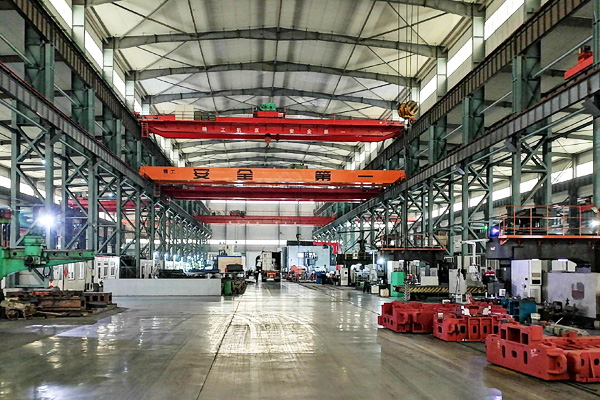
Hebei Haoxinran Machinery Manufacturing Co., Ltd (HXR Tools) operates its own casting branch, roughing and finishing machining shops and heat-treatment workshop, including a vibration ageing machine and Norwegian-imported high-frequency quenching equipment. Ask us for the process route behind your platform.
 HOT PRODUCTS

 CONTACT US
—— E-mail:project@haoranmj.com
—— Whatsapp:+86 18932785670
—— Tel:+86 18932785670
—— Add:Across from Sanjing Distillery on Road 4, Botou Economic Development Zone, Cangzhou City, Hebei Province