







News Detail
How to Enhance Safety While Using Welding Tables
author:hxrtools Time:2026-01-30 22:09:50 Click:108
Understanding the Role of a Welding Table in Safety
A welding table is more than just a flat working surface. It is a critical foundation for stability, accuracy, and safety in metal fabrication environments. Whether used in workshops, factories, or construction sites, welding tables directly influence how materials are positioned, clamped, and welded.
When a welding operation begins, forces such as heat expansion, vibration, and load transfer act on both the workpiece and the table itself. A properly designed welding table absorbs these stresses and keeps the workspace stable. Without adequate support, even skilled welders face higher risks of distortion, accidents, and equipment damage.
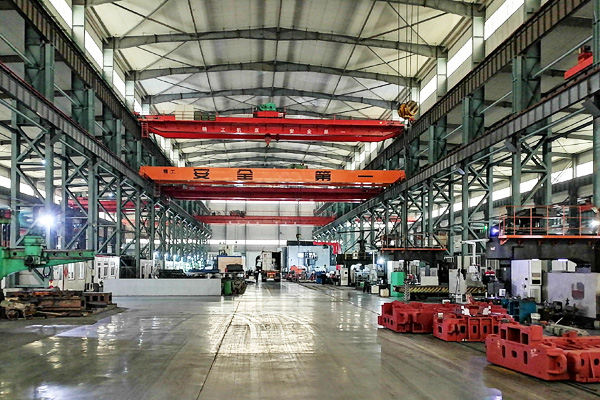
In modern manufacturing, a welding table produced through standardized factory production ensures consistent strength, flatness, and durability, helping users maintain safer working conditions throughout long production cycles.
Key Design Features That Improve Welding Table Safety
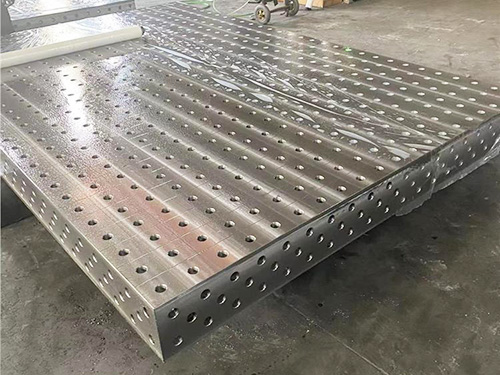
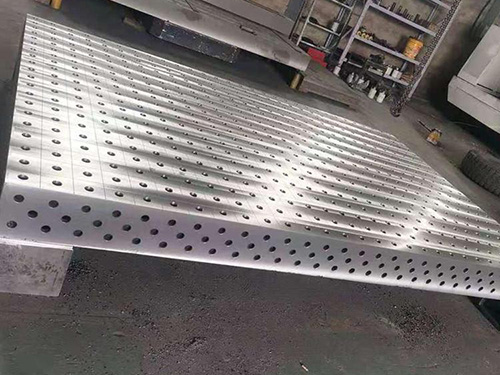
Safety starts with the design of the welding table. High-quality tables are built with rigid frames, thick steel plates, and reinforced legs that prevent unwanted movement during welding. These structural features reduce the chance of tipping or vibration when heavy components are placed on the surface.
Surface flatness is another important factor. A level welding table ensures accurate alignment of workpieces, which reduces stress concentration and minimizes the need for rework. Integrated holes or slots allow clamps and fixtures to be attached securely, keeping materials in position during heating and cooling cycles.
Because many tables are manufactured under controlled production environments, welding table manufacturers can maintain tight tolerances that directly contribute to operational safety and efficiency.
Load Capacity and Stability Control on a Welding Table
Every welding table has a defined load capacity that determines how much weight it can safely carry. Exceeding this limit can result in deformation, instability, or even collapse. For safety enhancement, users must understand both static and dynamic loads.
Static loads include the weight of the workpiece and tools, while dynamic loads come from hammering, clamping, and thermal movement during welding. A stable welding table distributes these forces evenly across its structure, preventing localized stress.
Stability is further improved through cross-bracing and non-slip feet that maintain contact with the ground. Many factory-produced welding tables include adjustable legs to compensate for uneven floors, ensuring the table remains level under real-world working conditions.
Proper Setup and Installation of a Welding Table
Correct installation plays a major role in welding table safety. Before operation, the table must be placed on a clean, solid surface free from oil, debris, or moisture. Any instability at the base can amplify vibration during welding.
Once positioned, the table should be leveled using adjustable supports. This ensures that the load is evenly transferred through the legs and frame. Fixtures, clamps, and accessories should be installed according to the table’s layout system so that workpieces remain secure during heat input.
In professional workshops, welding tables supplied through manufacturer bulk production often include standardized mounting interfaces, making installation faster and safer for operators.
Operational Safety Practices When Using Welding Tables
Even with a high-quality welding table, safe operation depends on proper user behavior. Operators should always secure workpieces using clamps rather than relying on gravity alone. This prevents sudden movement when welding arcs generate thermal expansion.
Heat management is also essential. Welding tables must dissipate heat efficiently to avoid warping. Using proper grounding connections reduces electrical hazards and protects both equipment and workers.
In addition, keeping the welding table surface clean from spatter, slag, and metal fragments minimizes slipping risks and improves fixture accuracy. A well-organized table layout reduces unnecessary reaching and bending, lowering ergonomic strain during long work sessions.
Maintenance and Inspection for Long-Term Safety
Routine inspection keeps a welding table safe over extended use. Operators should check for cracks, loose bolts, worn feet, or uneven surfaces that could affect stability. Minor defects can gradually lead to unsafe working conditions if left uncorrected.
Surface maintenance includes removing corrosion and spatter buildup. Protective coatings applied during factory production processes help resist oxidation and chemical exposure.
Lubricating adjustable components and replacing damaged accessories ensures the welding table continues to perform as intended. Regular maintenance not only improves safety but also extends the service life of the entire welding workstation.
Manufacturer Production and Factory Supply Advantages
Choosing a welding table from a professional manufacturer provides clear safety advantages. Factory-controlled production allows precise cutting, welding, and finishing that improve dimensional accuracy and structural reliability.
Through standardized production lines, welding table suppliers can maintain consistent load performance and surface quality across large batches. This is especially valuable for industrial users who require multiple tables with identical specifications.
Bulk supply from factory sources also ensures compatibility of accessories and fixtures, allowing workshops to implement unified safety practices across all welding stations.
Applications Across Industrial Welding Environments
A welding table is widely used across fabrication shops, heavy equipment assembly, construction maintenance, and industrial production lines. In each environment, safety remains the primary concern.
For large structures, welding tables provide controlled positioning for precision welding. In smaller workshops, they support flexible layouts that improve workflow efficiency. Regardless of scale, a properly designed and maintained welding table reduces accident risks and improves weld quality.
With reliable factory supply and consistent production standards, welding tables become long-term safety assets rather than simple workbenches.
Conclusion: Building a Safer Workplace With Welding Tables
Enhancing safety while using a welding table requires more than basic precautions. It involves intelligent design, proper installation, disciplined operation, and regular maintenance.
By selecting welding tables produced through professional factory production, users gain structural consistency, stable load performance, and reliable surface accuracy. Supported by experienced manufacturer supply systems and bulk production capabilities, modern welding tables help create safer, more efficient, and more controlled welding environments.
In today’s industrial landscape, a welding table is not just a tool — it is a safety platform that protects workers, improves productivity, and ensures long-term operational reliability.
References
GB/T 7714:Zhang Y, Wu X, Gao J, et al. Simulation and ergonomic evaluation of welders’ standing posture using Jack software[J]. International journal of environmental research and public health, 2019, 16(22): 4354.
MLA:Zhang, Yongbao, et al. "Simulation and ergonomic evaluation of welders’ standing posture using Jack software." International journal of environmental research and public health 16.22 (2019): 4354.
APA:Zhang, Y., Wu, X., Gao, J., Chen, J., & Xv, X. (2019). Simulation and ergonomic evaluation of welders’ standing posture using Jack software. International journal of environmental research and public health, 16(22), 4354.
 HOT PRODUCTS

 CONTACT US
—— E-mail:project@haoranmj.com
—— Whatsapp:+86 18932785670
—— Tel:+86 18932785670
—— Add:Across from Sanjing Distillery on Road 4, Botou Economic Development Zone, Cangzhou City, Hebei Province