







News Detail
Welding Fixture Tables: Custom Solutions for Industrial Assembly
author:hxrtools Time:2026-02-02 22:27:34 Click:58
Understanding the Role of a Welding Fixture Table
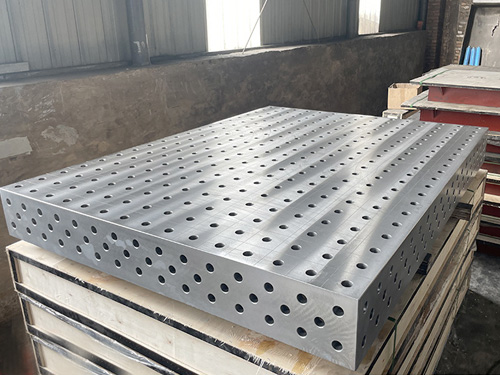
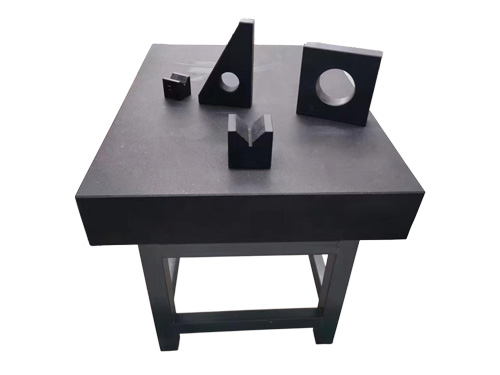
A welding fixture table is a specialized work platform designed to hold, align, and stabilize components during welding and assembly operations. Unlike standard workbenches, welding fixture tables integrate positioning holes, slots, and modular clamping systems that allow precise control over part placement.
In modern industrial environments, accuracy and repeatability are essential. A welding fixture table supports these requirements by creating a stable reference surface where components can be fixed in exact positions before welding begins. This reduces dimensional errors, limits distortion caused by heat, and improves overall product consistency.
Because many welding fixture tables are produced through standardized factory production, they deliver predictable flatness, load capacity, and durability that support continuous industrial use.
Core Design Principles of Welding Fixture Tables
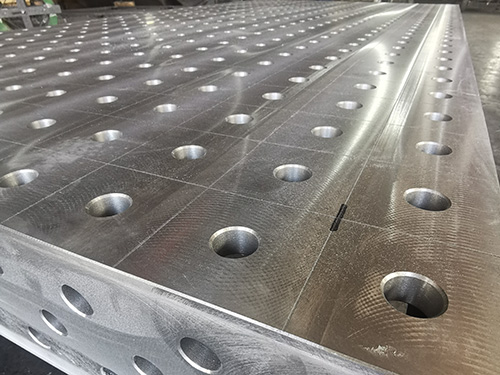
The performance of a welding fixture table depends heavily on its structural design. Most tables are manufactured from thick steel plates supported by reinforced frames to prevent deflection under load. High rigidity ensures that workpieces remain aligned even when exposed to thermal expansion during welding.
Surface geometry is equally important. Precision-machined holes or grid patterns allow operators to attach clamps, stops, and locators at consistent intervals. This modular approach transforms the welding fixture table into a flexible assembly platform that can be reconfigured for different projects without sacrificing accuracy.
Thanks to controlled production environments, manufacturers can maintain tight tolerances that directly improve fixture repeatability across large batches of tables.
Precision and Load Control in Welding Fixture Table Systems
Every welding fixture table must handle both mechanical and thermal loads. Mechanical loads include the weight of parts, fixtures, and tooling, while thermal loads result from welding heat and cooling cycles.
A high-quality table distributes these forces evenly across its frame, minimizing localized stress and preventing permanent deformation. Load control also helps maintain surface flatness over time, which is essential for repeatable assembly operations.
In industrial assembly, precision is closely tied to load behavior. When a welding fixture table remains stable under changing conditions, operators can trust the reference plane and reduce rework caused by misalignment. Factory-tested load performance ensures each table meets structural expectations before delivery.
Customization Options for Industrial Assembly
One of the main advantages of a welding fixture table is its adaptability. Industrial assembly often involves parts of different sizes, shapes, and tolerances. Modular accessories such as angle brackets, locating pins, and adjustable clamps allow the table to be customized for specific workflows.
Customization may include table height adjustment, surface coating selection, grid layout design, and integrated grounding features. These options help operators build efficient assembly stations without redesigning the entire workspace.
With professional manufacturer production, welding fixture tables can be configured for specific industries while still benefiting from bulk supply efficiency and standardized quality control.
Installation and Setup of a Welding Fixture Table
Proper setup is essential for maximizing the performance of a welding fixture table. The table should be installed on a stable, level surface to prevent uneven load distribution. Adjustable feet allow fine-tuning so the table remains flat even on imperfect floors.
After positioning, fixtures and clamps are arranged according to the project layout. This setup phase establishes the geometry that every welded component will follow. Any error at this stage can be multiplied across production runs.
Because welding fixture tables are delivered through organized factory supply systems, installation is faster and more predictable than fabricating work surfaces directly on site.
Safety and Workflow Optimization
Safety is a critical consideration in any welding environment. A stable welding fixture table reduces the risk of shifting parts, tipping tools, and uncontrolled movement during welding. Secure clamping keeps workpieces in place even when exposed to vibration or thermal distortion.
Workflow efficiency also improves when parts are positioned ergonomically. Operators can access weld joints without excessive reaching or bending, reducing fatigue and improving consistency.
Regular cleaning and inspection help maintain surface accuracy and prevent buildup of spatter or debris that could interfere with fixture placement. A well-maintained welding fixture table becomes both a productivity tool and a safety platform.
Manufacturer Production and Factory Supply Advantages
Choosing a welding fixture table from a professional manufacturer provides significant advantages over improvised solutions. Factory-controlled production ensures consistent plate thickness, surface flatness, and frame rigidity.
Through standardized production lines, suppliers can deliver welding fixture tables with repeatable performance across large volumes. This is especially important for companies that operate multiple assembly stations and require identical setups.
Bulk supply from a factory source also improves accessory compatibility and long-term maintenance efficiency, allowing industrial users to scale operations without compromising quality.
Applications Across Industrial Sectors
A welding fixture table is widely used in automotive assembly, heavy equipment fabrication, structural steel production, and industrial maintenance operations. In each sector, precision and repeatability are critical.
For large frameworks, welding fixture tables ensure consistent geometry across complex joints. For smaller components, they support fast changeovers between different assemblies. Regardless of scale, the table functions as a reference system that keeps production aligned with engineering requirements.
With reliable factory production and manufacturer support, welding fixture tables become long-term assets in industrial assembly environments.
Conclusion: Why Welding Fixture Tables Matter
A well-designed welding fixture table provides far more than a flat surface. It delivers precision, stability, customization, and safety for industrial assembly operations.
By integrating intelligent design with professional factory production and dependable manufacturer supply, welding fixture tables help companies improve workflow efficiency, reduce rework, and maintain consistent quality across production lines.
In modern manufacturing, investing in a reliable welding fixture table is a strategic decision that supports accuracy, safety, and scalable industrial performance for the long term.
References
GB/T 7714:Raheem A A, Olowu O A. International Journal of Engineering Research and Applications[J]. International Journal of Enginnering Research and Applications, 2012, 3(2): 85-93.
MLA:Raheem, A. A., and O. A. Olowu. "International Journal of Engineering Research and Applications." International Journal of Enginnering Research and Applications 3.2 (2012): 85-93.
APA:Raheem, A. A., & Olowu, O. A. (2012). International Journal of Engineering Research and Applications. International Journal of Enginnering Research and Applications, 3(2), 85-93.
 HOT PRODUCTS

 CONTACT US
—— E-mail:project@haoranmj.com
—— Whatsapp:+86 18932785670
—— Tel:+86 18932785670
—— Add:Across from Sanjing Distillery on Road 4, Botou Economic Development Zone, Cangzhou City, Hebei Province